


Service integrations
IT Services & Systems Integration<br /> Service integration is the creation of a unified digital ecosystem for your business by connecting your website, messengers, inventory, and analytics tools. This setup establishes instant, automated data exchange without manual copying, completely eliminates human error, and accelerates order processing. It is ideal for online stores, logistics companies, and scaling enterprises.About the service:
Comprehensive IT Services Integration for Business
We create a unified digital ecosystem, automate routine operations, and connect your software into a seamless, well-oiled mechanism.
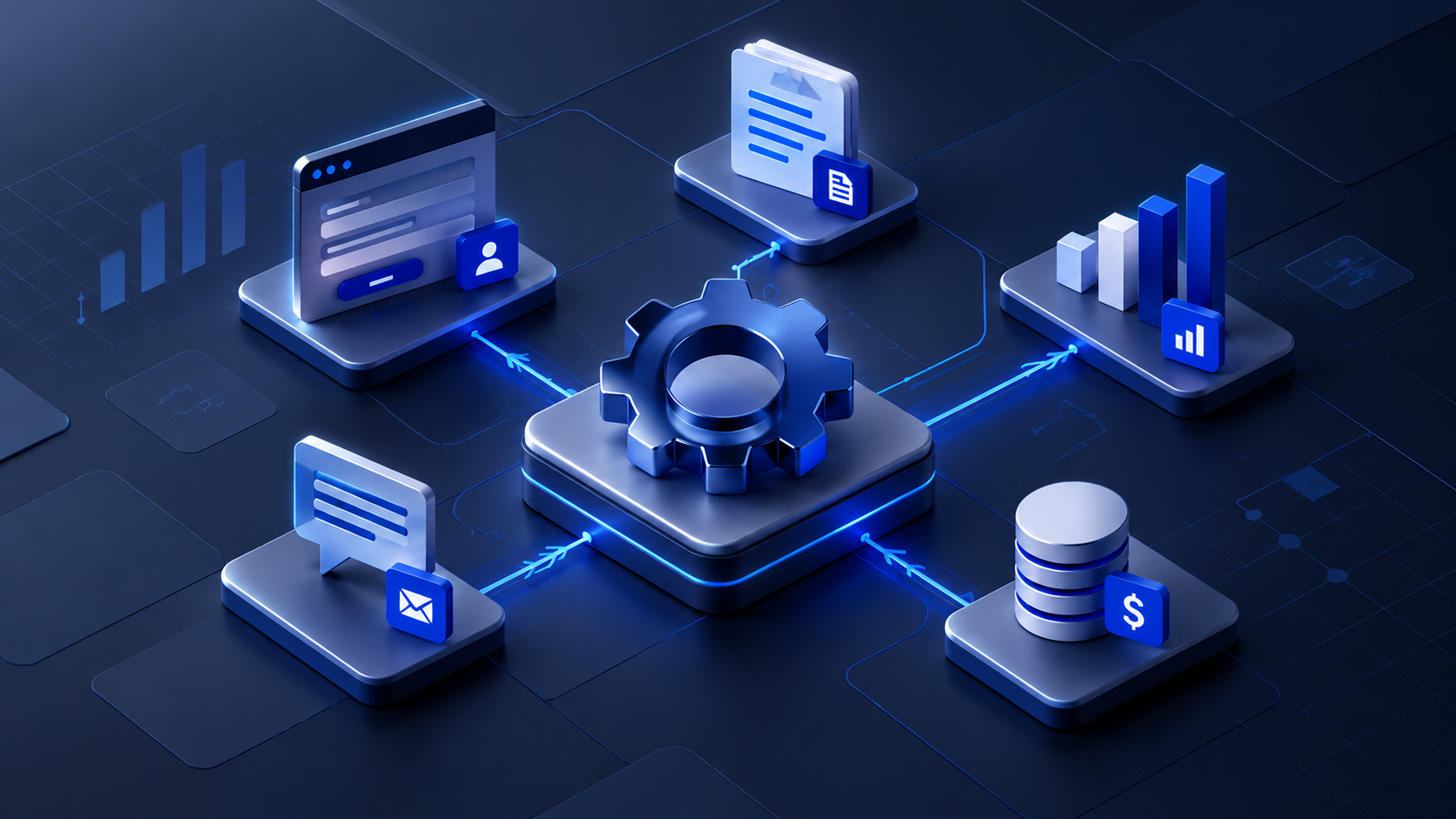
Service integration is the process of combining various IT tools, software, and platforms that a business uses in its daily operations. It enables automated data exchange between CRM, websites, accounting software, inventory management, messengers, and other systems without manual copying.
We develop and implement reliable integration solutions (via API, Webhooks, or ready-made connectors) that help businesses eliminate human error, accelerate order processing, and access real-time analytics in a single click. Every project is tailored to the specific business processes and objectives of your company.
Who is IT Integration For
Unifying IT systems is vital for companies aiming to scale, eliminate data chaos, and free employees from repetitive, manual tasks.
This service is a perfect fit for:
• e-commerce projects and online stores
• service-based businesses and the B2B segment
• logistics and courier companies
• small and medium enterprises outgrowing Excel
• medical centers and clinics
• real estate agencies
• online schools and info-marketing
• financial and insurance organizations
• retail chains with an online presence
• startups and SaaS platforms
What You Will Get
Upon project completion, you will receive a fully configured IT infrastructure where all services “speak” the same language, and data is transferred instantly and without loss.
The cost of the service includes:
• audit of current business processes and IT architecture
• development of an optimal service interaction scheme
• writing and configuring integration scripts / API connections
• automation of lead, status, and stock level transfers
• secure encryption and protection of transmitted data
• comprehensive system testing under peak loads
• staff training on using the updated system
• delivery of technical documentation for configured integrations
• post-launch technical support and monitoring
What the Service Includes
Process Analysis & Systems Audit
Before starting, we analyze the software you currently use, where bottlenecks occur, and which manual tasks consume most of your employees’ time. This allows us to identify the weakest links in your business’s IT circuit.
Data Architecture Design
At this stage, we map out a detailed data flow chart: where information comes from, where it is processed, where it goes, and in what format. We also design error-handling logic (e.g., if a third-party service is temporarily down).
Development & API Linking
Our developers configure the interaction between services. We work with standard REST/SOAP APIs and build custom solutions (middleware servers, databases, or gateways) if a direct connection between software is unavailable.
Synchronization Automation
We set up instant data updates. For example: a customer pays for an item on the website -> funds are captured in the payment gateway -> an invoice is generated in accounting -> order status updates in CRM -> warehouse receives a notification via Telegram -> customer gets a tracking number via automated message.
Testing & Load Simulation
We perform rigorous system testing. We verify the correct transmission of special characters, large volumes of data, system behavior during hundreds of simultaneous requests, and recovery mechanisms after unexpected crashes.
Security Management
Commercial and personal data transfers are heavily secured. We configure secure protocols and limit access rights using API keys and tokens to prevent any data leaks affecting your company or clients.
Integration Ecosystems
Upon request, we can integrate any third-party systems:
• CRM systems (Salesforce, Zoho, HubSpot, Zendesk, etc.)
• Payment gateways (Stripe, PayPal, Apple Pay, Google Pay)
• Shipping and delivery services (DHL, FedEx, UPS, local couriers)
• Websites and marketplaces (Shopify, WooCommerce, Magento, Amazon, eBay)
• VoIP and IP telephony (Twilio, RingCentral, 3CX)
• Messengers and chatbots (Telegram, WhatsApp, Messenger, Instagram API)
• ERP and accounting software (QuickBooks, Xero, SAP, NetSuite)
• Analytics and reporting tools (Google Analytics 4, Looker Studio, Power BI)
• Email and SMS marketing platforms (Mailchimp, Klaviyo, SendGrid)
Project Stages
1. Requirements gathering, brief analysis, and final software list approval
2. Technical audit of API methods and system architecture
3. Preparation of Technical Specification (TS) and data flow diagrams
4. Development of the integration solution in a sandbox environment
5. Comprehensive testing and bug fixing
6. Deployment to live systems (Production) and launch
7. Initial monitoring and post-launch adjustment
Timeline
The average timeframe for setting up integrations ranges from 7 to 30 business days.
The exact duration depends directly on the number of platforms to be connected, the availability of open and well-documented APIs, and the complexity of your company’s business logic.
Why Choose Us
• Deep expertise in IT architecture and business automation
• Creating flexible solutions that are easy to scale in the future
• Strict focus on security and confidentiality of your commercial data
• Clean code and comprehensive documentation for your in-house IT team
• Firm adherence to deadlines with milestone demonstrations
• Reliable technical support and stability monitoring after launch
• Experience working with complex, custom, and legacy systems
Frequently Asked Questions
1. What if our software doesn’t have an open API?
– We analyze the system. Data can often be extracted via intermediary databases, FTP servers, automated file parsing (XML, CSV), or by developing a custom module.
2. Will our data be safe during the integration setup?
– Yes. All development and initial testing are performed on copies of your systems (staging environments). The solution is deployed to the live database only after achieving 100% successful test results.
3. What happens if a third-party service (e.g., shipping) goes down?
– We implement request queuing into the integration logic. If a service is unavailable, the system will retry sending the data later and notify the administrator about the third-party downtime.
4. Can we add new software later on?
– Yes. We build modular architectures. You can easily add new services or replace old ones without having to rewrite the entire system from scratch.
5. How much does post-launch integration support cost?
– Support costs depend on data volume and the frequency of third-party API updates. We offer convenient maintenance packages to ensure system stability.
6. Do you help choose the right CRM or accounting software before integration?
– Yes. As part of our audit, we analyze your goals and recommend the optimal IT tools that best suit your business processes and budget.
Order IT Services Integration
Tell us about the software and tools you currently use and which routines you want to automate. We will build a reliable integration solution that frees up your time to focus on growing your business.